

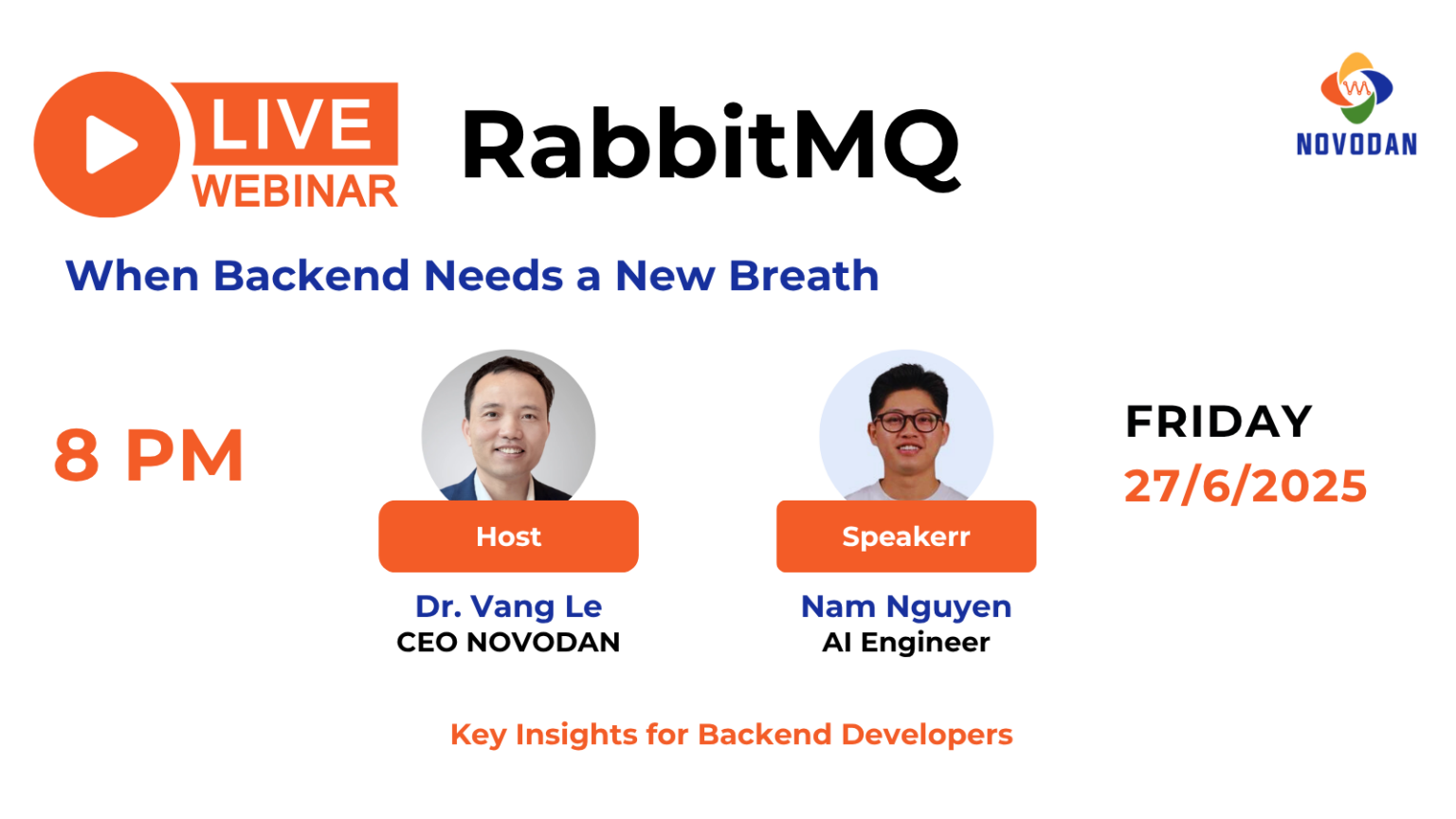
On the evening of June 27th, 2025, from 8:00 PM to 10:00 PM, the webinar “RabbitMQ – When Backend Needs a New Breath”, hosted by Novodan, was held successfully via Microsoft Teams and livestreamed on Facebook Live. This event was part of Novodan’s Tech Talk Series – a knowledge-sharing initiative aimed at developers, data engineers, and anyone interested in distributed systems.
From Fundamentals to Real-World Use: A Practical Look at RabbitMQ
Over the course of 2 hours, nearly 100 people registered and 40 actively joined the session to explore RabbitMQ – from its basic principles to how it empowers scalable, asynchronous backend systems.
Key highlights of the webinar included:
- ✅ An overview of RabbitMQ and its role in modern backend architecture
- ⚙️ Message flow, fault tolerance, and delivery guarantees
- ? Real-world case studies from banking to distributed AI
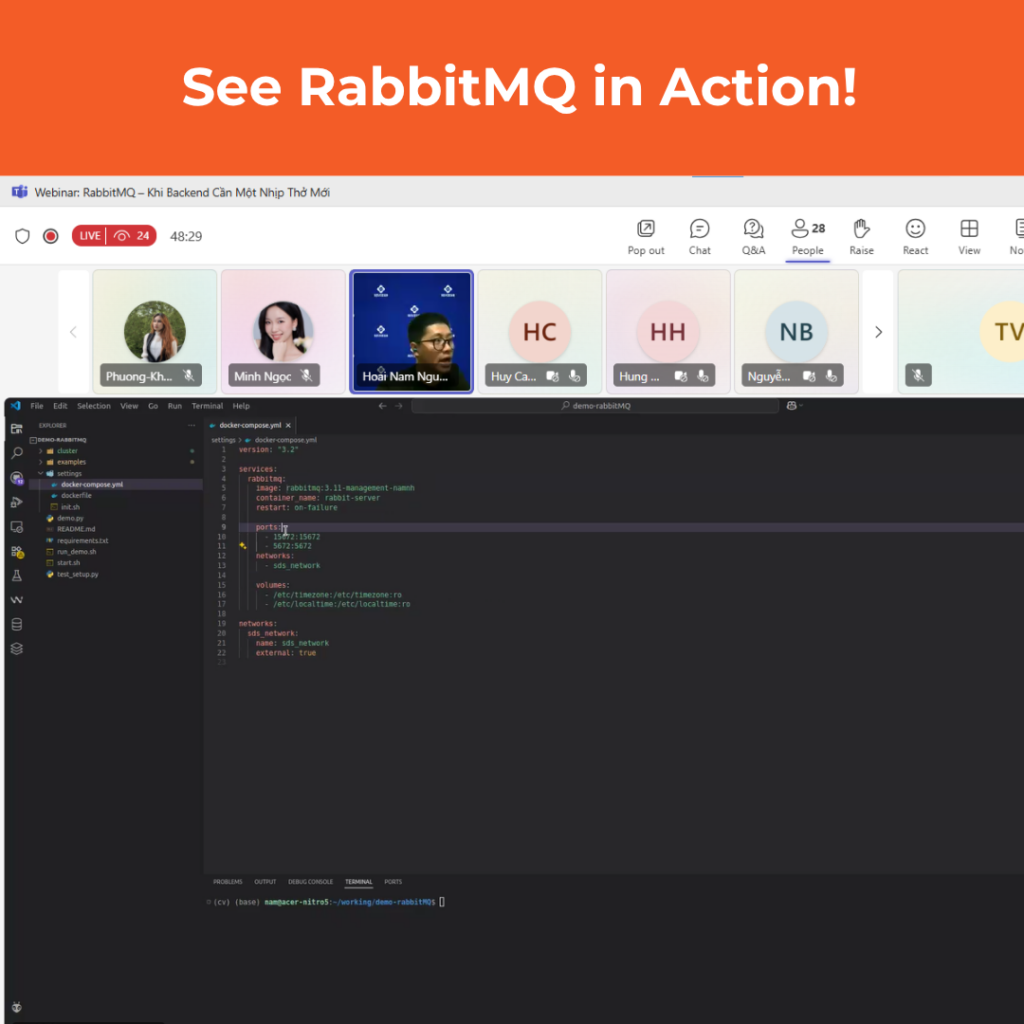
- ? Live demo: sending/receiving messages with RabbitMQ
- ? Interactive Q&A with participants diving into practical concerns
? Bonus Insight – RabbitMQ Under the Hood
The session didn’t stop at theory. Attendees gained a clear view of how RabbitMQ works under the hood, through a walkthrough of its core components and message routing flow:
- Producer & Consumer: Producers are applications that send messages, while consumers receive and process them. A single app can act as both. RabbitMQ pushes messages from queues to consumers, enabling true asynchronous processing.
- Exchange: Instead of sending messages directly to queues, producers send them to an exchange, which determines where the message should go. RabbitMQ supports multiple exchange types (direct, fanout, topic, headers), each with its own routing behavior.
- Queue: Where messages wait until a consumer is ready to process them. Queues follow FIFO order by default and support priority or delayed delivery if configured.
- Binding & Routing Key: Bindings connect exchanges to queues. Each binding can include a routing key, which acts as the “address” for messages. For example, with a direct exchange, a message is routed to the queue whose binding key exactly matches the message’s routing key.
- Message Flow: A diagram showed the full cycle:
(1) Producer sends a message to an exchange →
(2) Exchange evaluates routing key →
(3) Message is routed through matching bindings to appropriate queues →
(4) Stored until a consumer pulls it →
(5) Consumer processes it.
This entire process is loosely coupled and fault-tolerant, promoting high scalability in distributed systems.
Inspiring Speakers – Engaged Audience
The session featured:
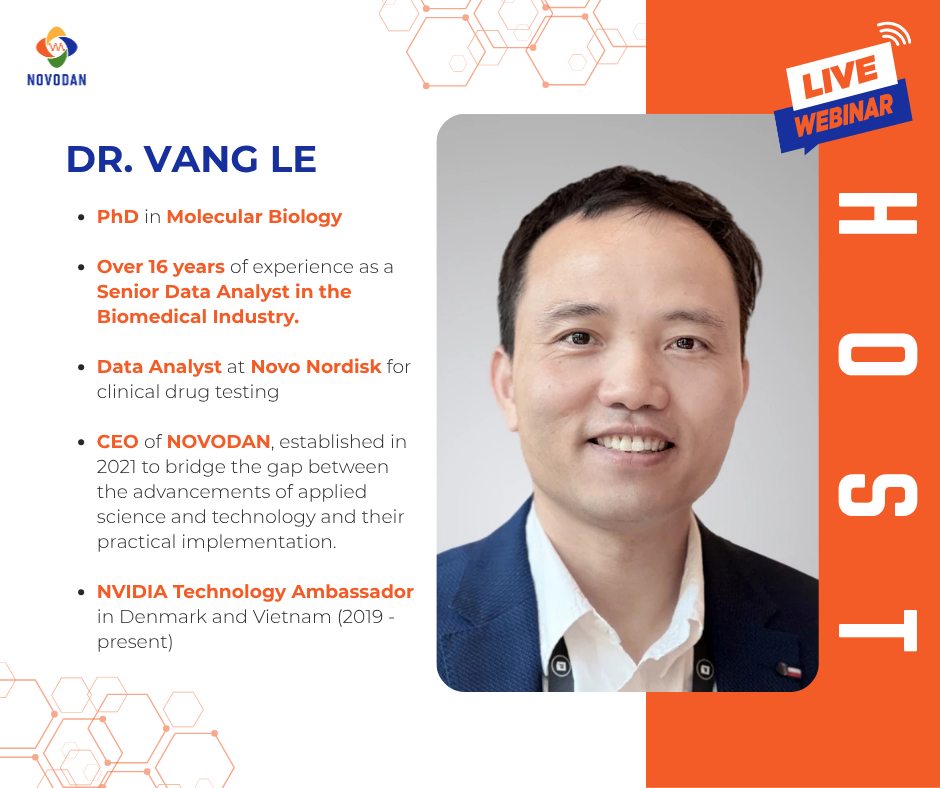
- ?? Dr. Vang Le – CEO of Novodan, biomedical data expert, and NVIDIA technology ambassador
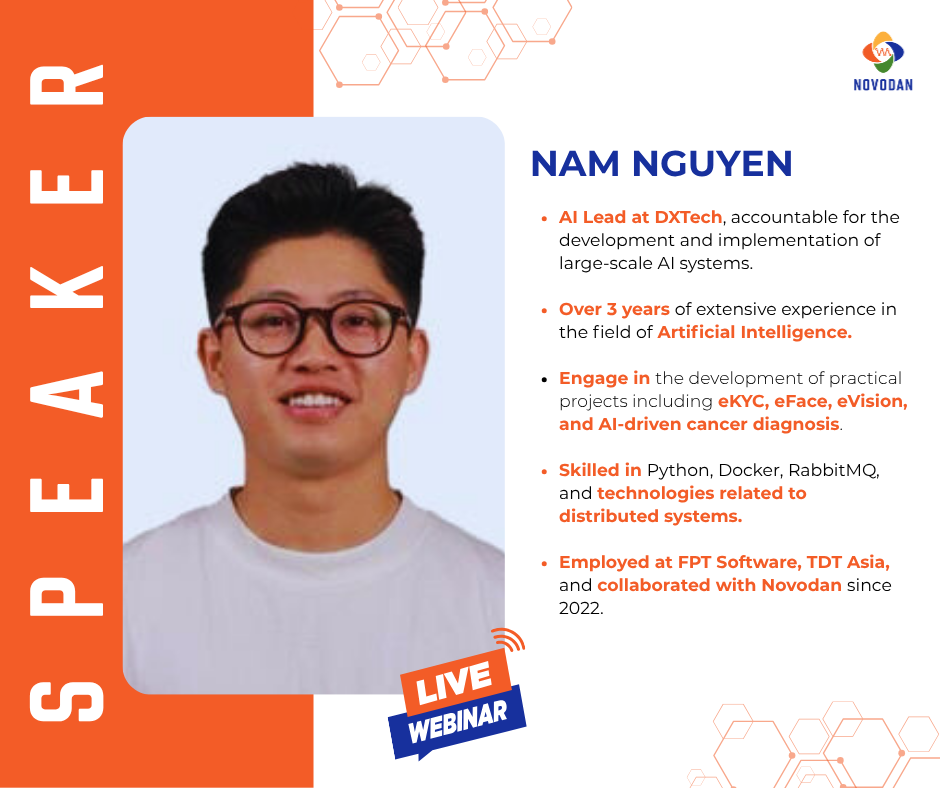
- ? Nam Nguyen – AI Engineer at Novodan, specializing in infrastructure for real-world deployments
The Q&A session sparked great discussion, with popular questions such as:
- “When should I use RabbitMQ in my system?”
- “What’s the difference between RabbitMQ and Kafka – and when to choose which?”
Slides, Recording & Post-Event Resources
Participants who registered received a follow-up email with exclusive materials:
- ? Full slide deck from the webinar
- ? Recording of the live session
- ? GitHub link to the demo code (embedded within the slides)
More Tech Talk Awaits
The success of this session reinforces our belief at Novodan:
“Technology knowledge should be shared, not stored.”
Our Tech Talk Series will return with more practical topics, live demos, and direct access to experts.
? Follow Novodan on social media and visit our website to stay updated on upcoming events!