
- This study has earned a Research Interest Score of 68.5 on ResearchGate, placing it in the top 3% of the most followed research items worldwide.
- Published in 2017, the study ranks in the top 2% of all research published that year, underscoring its enduring relevance.
- With 144 academic citations and a ResearchGate recommendation, this work demonstrates not only scholarly influence but also active community interest.
Project Description
-
Developed an enriched culture containing Tetrasphaera and Candidatus Accumulibacter using casein hydrolysate as the sole carbon source.
-
Investigated the metabolic behavior and ecological niches of both organisms in a mixed microbial community.
-
Focused on understanding how these organisms contribute to phosphorus removal in enhanced biological phosphorus removal (EBPR) systems.
Project Details
Results
-
Achieved >99% phosphorus removal efficiency under experimental conditions.
-
Found that Tetrasphaera accounted for approximately 80% of total phosphorus removal.
-
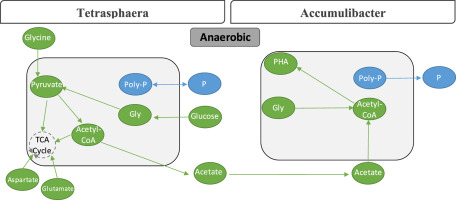
Identified that Tetrasphaera consumed amino acids anaerobically, while Ca. Accumulibacter relied on fermentation products.
-
Observed anaerobic orthophosphate (Pi) uptake (up to 9.0 ± 2.1 mg-P/L) from energy generated by glucose and amino acid fermentation.
-
Detected potential intracellular storage products such as amino acids, sugars, volatile fatty acids, and small amines.
-
Found evidence of the urea cycle, which may help reduce intracellular nitrogen content.
Goals Achivied
-
Enhanced understanding of the individual roles of Tetrasphaera and Ca. Accumulibacter in EBPR systems.
-
Provided insights for optimizing wastewater treatment processes by reducing aerobic Pi removal needs.
-
Identified new metabolic pathways that can be targeted to improve phosphorus removal efficiency in real-world WWTPs (Wastewater Treatment Plants).
Explore the full research here