
- This study has achieved a Research Interest Score of 108.2 on the academic platform ResearchGate – placing it in the top 2% of the most followed research worldwide.
- With 244 academic citations, the study demonstrates high value and strong credibility within the research community.
Project Description
- Investigated Tetrasphaera bacteria involved in phosphorus removal in wastewater treatment.
- Found to be diverse, comprising up to ~30% of the microbial community.
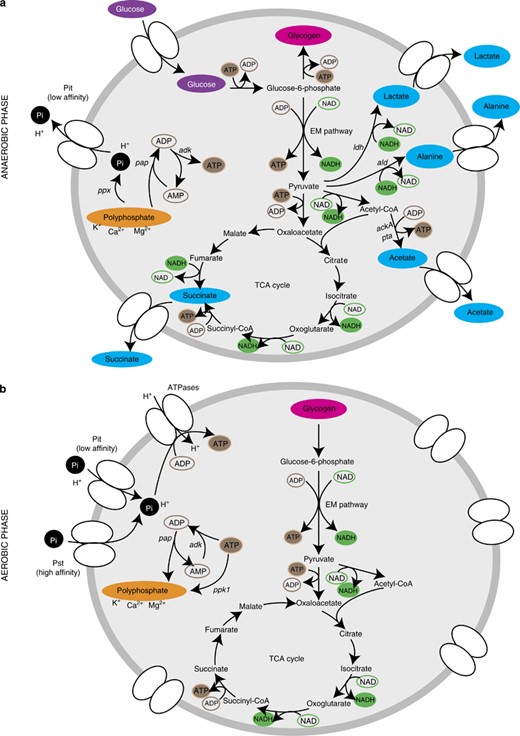
- Contributes to phosphorus removal by storing it as polyphosphate.
- Activated after consuming specific carbon sources (e.g., amino acids, glucose) under anaerobic conditions.
- Complements other bacteria, enhancing system stability and overall performance.
Project Details
Results
- A total of 23,264 16S rRNA gene clone sequences were analyzed from EBPR (Enhanced Biological Phosphorus Removal) systems.
- Tetrasphaera-related bacteria were the most abundant group, accounting for 11.6% of total sequences.
- Phylogenetic analysis using maximum likelihood identified several distinct clades within the Tetrasphaera lineage.
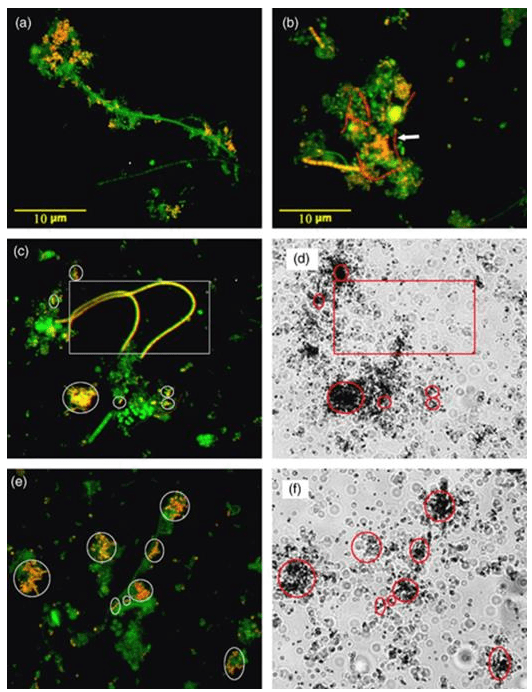
- New FISH probes were designed for major Tetrasphaera groups and applied successfully in full-scale EBPR plants.
- Microscopy revealed diverse morphologies, including rods, tetrads, and filaments, for Tetrasphaera cells.
- In situ quantification showed Tetrasphaera were often more abundant than ‘Candidatus Accumulibacter’, the traditionally recognized PAO.
- MAR-FISH analysis confirmed that Tetrasphaera can:
- Uptake and store polyphosphate (poly-P).
- Ferment glucose under anaerobic conditions.
- The findings suggest that Tetrasphaera plays a central role in phosphorus removal in EBPR systems—more so than previously recognized.
Goals Achivied
The study successfully achieved its initial objectives:
- Clarified the genetic, morphological, and phylogenetic diversity of Tetrasphaera in full-scale EBPR systems.
- Confirmed their key role in EBPR, including their ability to accumulate polyphosphate under specific conditions.
- Revealed their high abundance, often exceeding that of Accumulibacter, in multiple WWTPs.
- Expanded understanding of their ecophysiology, demonstrating metabolic traits distinct from classical PAOs.
- Provided practical insights for microbial monitoring and potential manipulation of PAO communities to enhance EBPR performance.
Explore the full research here