

Project Description
-
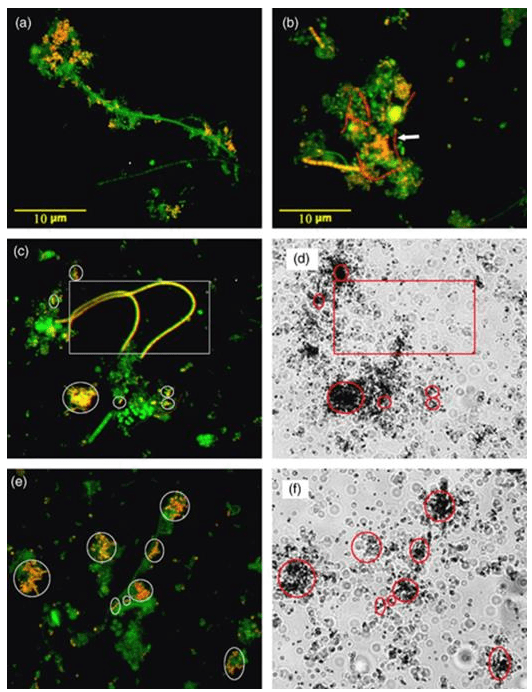
Applied Microautoradiography combined with Fluorescence In Situ Hybridization (MAR-FISH) to investigate key microorganisms involved in biological phosphorus removal in full-scale wastewater treatment plants.
-
Focused on identifying uncultured Pseudomonas species with potential as polyphosphate-accumulating organisms (PAOs).
-
Developed and used novel oligonucleotide probes targeting Pseudomonas-related small rod-shaped bacteria in the microbial community.
-
Aimed to understand the metabolic capabilities and ecological role of these bacteria within the enhanced biological phosphorus removal (EBPR) process.
Project Details
Results
-
Identified previously uncultured Pseudomonas-related organisms within the Halomonadaceae family as active phosphate-accumulating bacteria.
-
These bacteria were not detected by commonly used probes for Gammaproteobacteria (e.g., GAM42a) or even the general EUBmix bacterial probes, indicating a novel group within the community.
-
Demonstrated ability to uptake orthophosphate (Pi) and short-chain fatty acids such as acetate and propionate, under both anaerobic and aerobic conditions.
-
Observed polyhydroxyalkanoate (PHA) storage in anaerobic environments, with phosphate uptake and growth only in the presence of oxygen, showing no denitrifying activity.
-
Quantitative analysis across 23 full-scale EBPR plants revealed that these organisms comprised 3–5% of the bacterial population, often in higher abundance than the well-known ‘Candidatus Accumulibacter PAO’.
Goals Achivied
-
Successfully identified and characterized a novel group of Pseudomonas-related PAOs contributing to phosphorus removal in EBPR systems.
-
Developed specific molecular tools (new oligonucleotide probes) for targeting and tracking these organisms in full-scale treatment systems.
-
Provided critical evidence of their metabolic potential, supporting their role as key contributors to EBPR performance.
-
Generated valuable insights to help optimize microbial management strategies in wastewater treatment operations.
Explore the full research here