
Project Description
-
Conducted a three-year study on the microbial communities involved in Enhanced Biological Phosphorus Removal (EBPR) across 28 Danish municipal wastewater treatment plants.
-
Used Fluorescence In Situ Hybridization (FISH) to quantify ten key populations of polyphosphate-accumulating organisms (PAOs) and glycogen-accumulating organisms (GAOs).
-
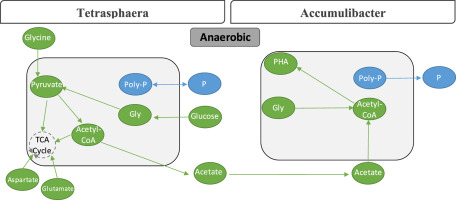
Found that PAOs—especially Tetrasphaera (27%) and Accumulibacter (3.7%)—were consistently abundant and stable across all EBPR plants.
-
GAOs were only present in a few plants and at much lower levels than PAOs, indicating they are not core members of EBPR systems.
-
Plants with no EBPR design showed significantly lower abundance of both PAOs and GAOs.
-
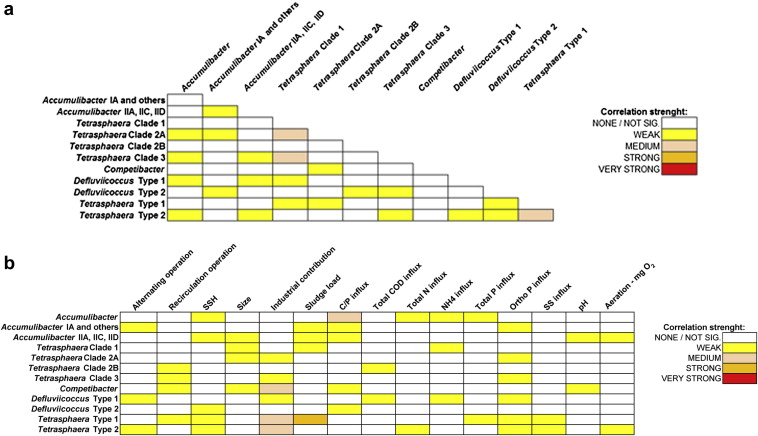
Observed correlations between specific microbial populations and wastewater characteristics:
-
Competibacter with high industrial wastewater fraction
-
Accumulibacter with high carbon-to-phosphorus (C/P) ratios
-
Tetrasphaera with high organic loading
-
-
Each treatment plant had a unique microbial “fingerprint”, showing that community structure is plant-specific and stable over time.
Project Details
Results
-
The total fraction of PAO and GAO populations made up approximately 30% of the total bacterial community in EBPR plants.
-
The two main PAO genera identified were Accumulibacter (average 3.7%) and Tetrasphaera (average 27%), both consistently abundant and stable across all EBPR plants.
-
GAOs such as Competibacter and Defluviicoccus were found only sporadically and in lower abundance, particularly in plants receiving a high fraction of industrial wastewater.
-
Plants lacking EBPR design had significantly lower abundances of both PAOs and GAOs.
-
Microbial composition varied by plant but remained stable over time, creating a plant-specific microbial “fingerprint”.
-
Accumulibacter was positively associated with high carbon-to-phosphorus (C/P) ratios, while Tetrasphaera correlated with high organic loading conditions.
Goals Achivied
-
Established a microbial baseline: Quantified the presence and relative abundance of key PAO and GAO populations in Danish full-scale EBPR systems.
-
Identified dominant PAO species: Tetrasphaera was revealed as the dominant PAO genus, more abundant than the traditionally studied Accumulibacter.
-
Clarified GAO behavior: Demonstrated that GAOs are not core members of EBPR communities and are primarily influenced by specific operational factors like industrial input.
-
Explained performance variability: Correlations between specific microbial populations and wastewater characteristics (e.g., C/P ratio, organic loading) help explain why EBPR performance varies among plants.
-
Developed plant-specific microbial profiles: Showed that each treatment plant hosts a unique, stable microbial community over time, contributing to tailored operational strategies.
Explore the full research here